Sunday, 17 January 2010
ARTWORK

MY FILM
Sound and Editing – Slow shots in the dream sequences, fast shots for real scenes. Lots of special effects to show the boy turning insane.
Lighting – First half very dark and mysterious, as they boys sanity goes it gets a lot brighter and madder.
My storyboards and log have been handed in.
Due to filming restrictions I have to cancel out the corridor scene, but will have quick shots of my bird costume following the boy, this will be filmed as soon as possible.
Anthony Gormely.
Born: 30 August 1950
Died: N/A
He is an English sculptor. His best known sculpture is the Angel of the North.
He is the youngest of seven children, born to a German mother and an Irish father. I found out a lot about him when we watched a video in diploma, we saw a lot of his work, we also visited Crosby beach where I did a lot of filming and ‘Another Place’ is there, ‘Another Place’ is a piece of modern sculpture by Antony Gormley. It was due to be moved to New York, United States in November 2006, but there was a controversial proposal to retain the work at Crosby. They are now staying there forever. The piece is based all around space, they are all spaced out and looking to sea, they can never communicate with each over yet they are so close, I found it very interesting. There are 100 figures and at low tide they are all visible, but at high tide you can hardly see any, the ones submerged are experiencing ‘another place’. Number 72, has a lead role in my film!
^ Please watch the video above ^
Other Works:
Field ('91)

Angel of the North

Sound II

This is my personal favorite as I love the idea of it being in a church it really makes it mystical and quite scary, the figures are praying but it makes you wonder, praying for what? the building is full of water and it just scares me.
George Segal.
Born: November 26, 1924, New York
Died: June 9, 2000, New Brunswick, New Jersey
He was an American painter and sculptor associated with the Pop Art movement. Segal started his art career as a painter; his best known works are cast life-size. He used of plaster bandages which is where I think Melissa got inspiration from. In this process, he first wrapped a model with bandages in sections, then removed the hardened forms and put them back together with more plaster to form a hollow shell. These forms were not used as moulds; the shell itself became the final sculpture, including the rough texture of the bandages. He originally kept them all white, but in later days he started to paint them they had minimal colour and detail, which gave them a ghostly appearance. They were typically placed in urban environments such as a street corner, bus, or diner.

Social and Historical Timeline:
• 1922—Joyce's Ulysses published
• 1927—Farnsworth demonstrates working model of a television; Lemaitre proposes big bang theory
• 1928—Fleming discovers penicillin
• 1929—Hubble proposes theory of expanding universe; U.S. stock market crash precipitates global depression
---------------------------------
• 1936—Keynes's The General Theory of Employment, Interest, and Money
• 1939—Hitler invades Poland; World War II begins
---------------------------------
• 1942—Nazi leaders at Wannsee Conference coordinate “final solution to the Jewish question”
• 1945—Atomic bombs are dropped on Hiroshima and Nagasaki; first electronic computer, ENIAC, is built; Arab League launches modern pan-Arabism
• 1946—First meeting of U.N. General Assembly; Churchill's “Iron Curtain” speech marks beginning of cold war
• 1947—Gandhi's civil disobedience movement leads to an independent India
• 1949—Communist victory in China under Mao Zedong
Films released in 1940
• Yankee Doodle Dandy (1942) — Story of George M. Cohan, the actor-singer-dancer-playwright-songwriter-producer-theatre owner-director-choreographer known as "The Man Who Owns Broadway"
• Sergeant York (1941) — Story of Sergeant Alvin York, the most decorated American soldier of World War I.
---------------------------------
• 1950s—Abstract expressionism introduced
• 1953—Watson, Crick, and Franklin discover DNA's structure
• 1954—Brown v. Board of Education begins unravelling of U.S. racial segregation
• 1957—Russia launches first satellite, Sputnik I
• 1959—Mary and Louis Leakey uncover hominid fossils
Films released in the 50’s
• Man of a Thousand Faces (1957) is a film detailing the life of silent movie actor Lon Chaney, Sr.
• The Dam Busters (1955) - story of the famous raids against German dams in World War II.
• All About Eve (1950)
• To Hell and Back (film) (1955) - Story of Audie Murphy, America's most decorated soldier.
---------------------------------
• 1969—Armstrong and Aldrin walk on the Moon; Internet (ARPA) goes online
Films released in the 60’s
• The Great Escape (1963) — Allied prisoners stage a mass breakout of Stalag Luft III.
• The Longest Day (1962) - Story of the WWII D-Day Invasion.
• The Miracle Worker (1962) — Story of Helen Keller.
---------------------------------
• 1980—Smallpox eradicated
• 1981—Scientists identify AIDS
• 1989—Fall of Communism in Eastern Europe
Films released in the 80’s
• Glory (1989) — Based on the 54th Massachusetts Volunteer Infantry during the American Civil War. Directed by Edward Zwick.
• Mississippi Burning — Based on the FBI investigation following the 1964 slayings of three political activists. Directed by Alan Parker.
• The Accused (1988) — Based on the 1983 rape of Cheryl Araujo at Big Dan's Tavern in New Bedford, Massachusetts.
• Nayagan (1987) — Based on the life of Underworld Don Varadarajan Mudaliar.
• The Last Emperor (1987) - Based on the life of Chinese emperor Pu Yi.
• Cry Freedom (1987) - Based on the life of South African activist Steve Biko.
• The Untouchables (1987) - Loosely based on the 1930s crackdown on Chicago gangster Al Capone by FBI agent Elliott Ness.
• Hoosiers (1986) — Based loosely on the story of the 1953-54 Milan High School basketball team, winners of that year's Indiana state high school basketball championship despite representing a school of about 160 students.
• The Delta Force (1986) — Based heavily on the hijacking of TWA Flight 847 in 1985. Directed by Menahem Golan.
• At Close Range (1986) — Based on rural Pennsylvania crime family led by Bruce Johnston, Sr. Directed by James Foley.
• Marie (1985) — Based on Marie Ragghianti's exposure of the 1970s Tennessee parole board scandals; adapted from the book Marie: A True Story by Peter Maas.
• The Right Stuff (1983) - Based on Tom Wolfe's 1979 book about the test pilots involved in early high-speed aeronautical research and the United States' first attempt at manned spaceflight.
• 10 to Midnight (1983) - Parallels the murders committed by Richard Speck. Directed by J. Lee Thompson.
• The Entity (1981) - Based on the book by Frank deFelitta. Directed by Sidney J. Furie.
• Coal Miner's Daughter (1980) — Adapted from the book by Loretta Lynn and George Vecsey. Directed by Michael Apted.
• The Elephant Man (1980) — Story of Joseph Merrick. Directed by David Lynch.
• Amadeus (1984)- Adapted for the screen by Peter Shaffer, who also wrote the play on which it was based. Directed by Milos Forman. The film was based upon the theory that composer Wolfgang Amadeus Mozart was murdered by fellow composer Antonio Salieri
I am at this moment doing some more research for newer films and historical events to link them to.
SIDENOTE: My Alfred Hitchcock time line is not on the blog as it is on a separate sheet.
René Magritte
René François Ghislain Magritte

Born:
21 November (My Birthday!) 1898, Lessines, Belgium
Died:
15 August 1967 (aged 68) Brussels, Belgium
Famous Works:
The Treachery of Images
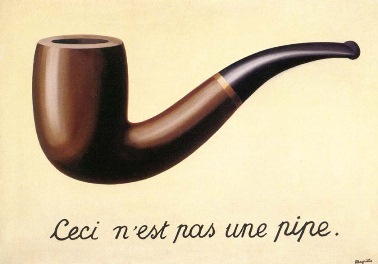
On the Threshold of Liberty

The Son of Man
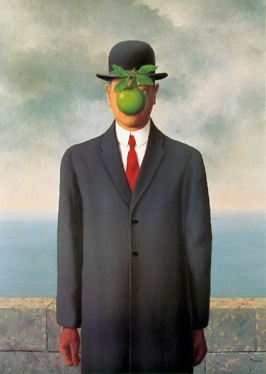
His mum committed suicide by drowning her self in the River Sambre 12th March 1912, 2 years after Rene started drawing lessons, he was only 13 and was apparently there when the body was retrieved. In 1922 he married Georgette Berger who he had met as a child in 1913. In 1926 he produced his first piece of surreal art, which as slated by critics. He became depressed by the failure of his first exhibition in 1927 and he moved to Paris where he became friends with Andre Breton and became involved in a surrealist group. He moved back to Brussels in 1930 after little impression in Paris and he resumed work in advertising, his work only really became popular in the 1960’s but in 1967 he died in his own bed from pancreatic cancer.
The Surrealism movement.
• Began around the early 1920’s
• Soon it was affecting painting, literature and films
• It works on the element of surprise,
• Surrealism developed out of the Dada** activities of World War I and the most important center of the movement was Paris.
• From the 1920s on, the movement spread around the globe, eventually affecting the visual arts, literature, film, and music.
** WHAT IS DADA?
Dada or Dadaism is a cultural movement that began in Zürich, Switzerland, during World War I and peaked from 1916 to 1922. The movement primarily involved visual arts, literature—poetry, art manifestoes, art theory—theatre, and graphic design, and concentrated its anti-war politics through a rejection of the prevailing standards in art through anti-art cultural works. Its purpose was to ridicule what its participants considered to be the meaninglessness of the modern world. In addition to being anti-war, dada was also anti-bourgeois and anarchistic in nature.
LATER SURREAL FILMS: (director first then film in brackets)
• Kenneth Anger (Fireworks and Inauguration of the Pleasure Dome)
• Darren Aronofsky (π)
• Carlos Atanes (CODEX ATANICUS, FAQ: Frequently Asked Questions')
• Luis Buñuel (The Phantom of Liberty and The Exterminating Angel)
• Donald Cammell (Wild Side)
• Víctor Erice (The Spirit of the Beehive)
• Michel Gondry (Eternal Sunshine of the Spotless Mind and The Science of Sleep)
• Jean-Pierre Jeunet (Delicatessen and La Cité des enfants perdus)
• David Lynch (Eraserhead and Blue Velvet)
• Peter Greenaway (Drowning by Numbers)
• Nicolas Roeg (Performance and Walkabout)
• Lars von Trier (The Kingdom)
SURREAL ART:


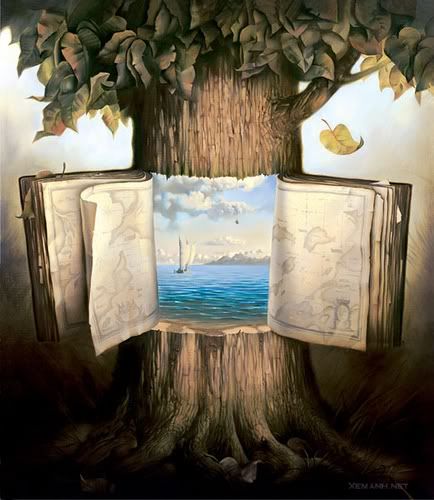
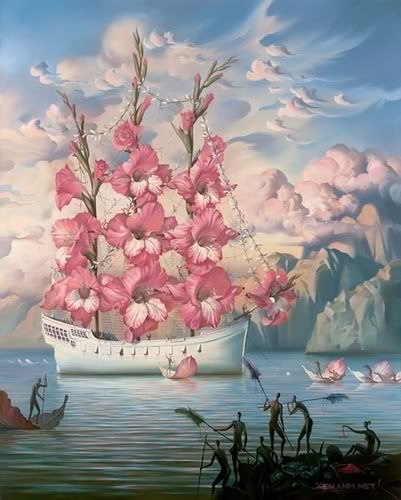
SURREAL art is all about putting ordinary and ordinary together to make Extraordinary.
Dalí and Miró were the most famous surreal artists. Others were Max Ernst, Magritte, Man Ray, Dorothea Carrington, and Dorothea Tanning. For my DVD cover I am doing a piece of surreal art on photo shop, I am going to base it on the work of Rene Magritte.
David Lynch research:
Born: 20th January 1946 in Missoula, Montana
Died: N/A
He is famous for writing and directing what can only be called "David Lynch movies," which include crazy/mad storylines and a mix of the surreal
Lynch is also a photographer, musician and painter... His daughter, Jennifer Lynch, wrote and directed the 1992 feature film ‘Boxing Helena.’
His first film, Eraserhead (1976), became a cult. This caused Mel Brooks to ask David Lynch to direct The Elephant Man (1980) he was nominated for an Oscar.
His next film was unsuccessful (1984's version of Frank Herbert's classic sci-fi novel ‘Dune’)
But he became popular again with ‘Blue Velvet’
By now he was very well know and ventured into television, most famously for a Calvin Klein commercial and for the series Twin Peaks.
His 2001 film Mulholland Drive earned him another Oscar nomination for Best Director.
My review of Mulholland Drive:
Originally intended as a TV series, yet the ABC saw his pilot and told him to leave.
After an exciting car crash a confused brunette (she has no name, as she can’t remember it, but she later adopts the name Rita) stumbles into the life of Betty Elms, a would-be actress just off the plane from Ontario. With no memory of who she is, or why she has a purse full of money and Betty's help, she sets out to rediscover her identity. And then things get really weird. There is no point explaining this rest of the film as I don’t understand it myself. It includes a monster hiding around a diner, a pair of creepy old people, a lot of lesbian action, a few dead bodies and a box which changes EVERYTHING. As soon as you think you MIGHT understand it, the whole story changes and the characters are all different people (including Rita is now the awakened dead body). I think the film has the desired effect on me as for weeks afterwards I was searching the internet to find out what happened, I re watched the film trying to pick out every little detail e.g. the color of the lamps. I never did find out what happened.
I also watched DUMBLAND which was very different to what I expected, and very shocking, after some research I could not find any conventions of Lynch, but with my own experience the conventions I found are NONE of his films are ‘normal’ they are all surreal and aimed to mess with your head, it worked.
Alfred Hitchcock research:
Born: 13 August 1899
Died: 29 April 1980
He was a British filmmaker and producer who created many techniques in the suspense and psychological thriller genres. After a successful career in the United Kingdom in both silent films and early speaking films, Hitchcock moved to Hollywood.
In 1956 he became an American citizen while retaining his British citizenship.
Hitchcock directed more than fifty feature films in a career of over 60 years.
There is a timeline of his most important work and events that I drew up, this will be handed in.
He remains one of the most popular and most recognised filmmakers, and his works are still popular today.
In 2007 Hitchcock was ranked #1 by film critics in The Telegraph's list of 21 greatest British directors, his most famous film is considered to be “Psycho” and the shower scene is a cult classic.
My REVIEW of the shower scene:
The shower scene in which Marion is killed is considered one of the most stunning and horrifying scenes of all time, although you never see the knife puncture the skin. Legions of fans claim that for many years after watching it, they refused to take showers.
Hitchcock decided to shoot the whole film in black and white as he was worried about the goriness of the scene. Fake blood looks Grey in black and white so he used chocolate syrup instead.
I think it is great how camera becomes the knife, as it adds less gore but yet makes the audience cringe as they know what’s happening, it makes the audience feel closer to the film and with these camera shots it doesn’t reveal the murderer.
Filming the shower scene took seven days and more than 70 separate camera angles.

After doing some research here are some conventions used by Alfred Hitchcock:
- He wore suits on film set.
- Lots of shots of a woman's hairstyle, frequently in close-ups.
- Used bathrooms a lot in films, a hiding place or a place where the characters prepare for sexual intercourse.
- He frequently used the letters "BM," which stand for Bowel Movement (this fits in with the bathrooms)
- BIRDS: (THIS IS MY MAIN INSPIRATION) There are countless images of birds in nearly all of his films, such as:
- Psycho - The film begins in Phoenix, Arizona and a Phoenix is also a mythological bird. Marion's last name is Crane (A type of bird). Norman practices taxidermy as a hobby and his favorites are birds. Norman describes Marion's eating behavior as "eats like a bird".
Vertigo - Gavin's last name is Elster, which is German for Mockingbird. (I WILL TRY AND INCLUDE THESE NAMES and some of my own, IN MY MOVIE, I WILL ALSO HAVE A FEW ‘BIRD EYE’ SHOTS)
- Often used mistaken identity theme in his movies such as;
E.G (Saboteur (1942), I Confess (1953), The Wrong Man (1956), North by Northwest (1959), Frenzy (1972)).
- Blonde women such as Anny Ondra, Madeleine Carroll, Joan Fontaine, Ingrid Bergman, Grace Kelly, Eva Marie Saint, Kim Novak, Vera Miles.

Saturday, 16 January 2010
Horror, Thriller and Fantasy films in better detail.
Are unsettling films designed to frighten and panic, cause dread and alarm.
They are used to give the "thrill" some people need, and give an adrenalin boost when you are scared.
Horror films are also known as chillers, scary movies, spook fests, and the macabre.
Horror films mostly center on the dark side of life, such as murders, rape e.g. They sometimes rely on the supernatural since along as the human race has been alive, they have had nightmares and feared monsters, they focus on our vulnerability, our terror of the unknown, our fear of death and gore, loss of identity, or fear of sexuality.
They have been around nearly along as movies them self's and are guessed to have originated in the 1890's, after research I have found that one of the first horror movies was 'The House of the Devil' also know as 'Le Manoir du diable' it was released in 1896, it was only 2 minutes long, but it set off the start of a huge culture.
The earliest horror films were very Gothic, meaning that they were usually set in spooky old mansions and castles with foggy surroundings and shadowy settings. In 1906 one of the first "Monsters" entered our screens with Quasimodo (otherwise known as the hunchback of Notre Dame) in the film 'Esmeralda'

Lengthy Horror films originated in the 1910s and 1920s by German filmmakers.1922 brought around 'Nosferatu' the first ever vampire film and is still a cult classic.
The 1930’s brought American Producers, who popularized the genre and in LATER DAYS produced some very famous films such as Dracula and The Mummy.
The 1940s brought several B Movies such as 'I Walked With A Zombie'.
** The Wolf-Man was also released this year which was a very influential film.
By the 1950's Horror was very popular and split into 3 genres - still used today:
Personality :
No monsters, but horrific personalities in the leading characters, such as Serial Killers, Evil Scientists and Mad-men
Armageddon :
Shows the end of our world.
Supernatural :
Films with monsters, ghouls, aliens and other supernatural beings.
A lot of modern Horror films rely on computer graphic imagery and special effects, due to changes in technology, there is not much point building the whole movie up with some very quick glances of the monster when these days you can have a very realistic monster all the way through. Horror films, when done well and should rely less on horrifying special effects and only imply or suggest the horror in subtle ways, rather than blatantly displaying it, i.e., Val Lewton's horror films.
Horror films have a lot in common such as:
The setting - frequently a haunted house or graveyard.
A main villain - such as ONE monster, ONE murderer.
A main victim - someone the monster or murderer is after, someone you don't want to get hurt.
Science Fiction - Aliens, Out of this world
Special effects - Monsters E.g (THIS IS MOSTLY MODERN HORROR FILMS)
Sound tracks - Loud, Jumpy, Over the top.
Taboo - Not usual things, uncomfortable for the viewer e.g blood, guts, sex.
Thriller & Suspense Films :
Are types of films made to give intense excitement, suspense and a high level of anticipation. A genuine thriller is supposed to provide thrills and keep the audience hanging at the edge of their seats as the plot builds towards a climax. It is closely related to Horror genre such as Halloween - 1978.
Thrillers are often mixed with other genres like action such as 'Bourne Identity' and Sci Fi e.g 'Alien'. There are also psychological thrillers, military thrillers, spy thrillers, and the list goes on. It's easier to recognize a thriller
Suspense-thrillers come in all shapes and forms: murder mysteries, private eye tales, chase thrillers, women-in-danger films, courtroom and legal thrillers, erotic thrillers, surreal cult-film soap operas, and atmospheric and plot-twisting psychodramas.
Characters in thrillers include convicts, criminals, stalkers, assassins, innocent victims (often on the run), characters with dark pasts, psychotic individuals, terrorists, cops and escaped cons, private eyes and people involved in twisted relationships.
To keep the viewers interested Thriller films are so much more bloodier and gruesome these days. Thriller movies used to be more psychological, but now with newer audiences getting bored and less impressed they have had to change it to keep them interested.
Fantasy Films:
Are films which don't need to depend on any scientific knowledge what so-ever, when some horror films are thriller films base they're idea's on this planet or on people and places the exist, fantasy films can rely on none of this and can set them in unreal worlds or fairy tale lands in non existent places, with things that are impossible. Fantasy films often have an element of magic, myth and wonder and also the extraordinary. They appeal to both children and adults, depending upon the particular film.
Some conventions are flying carpets, magic swords and spells, dragons, and ancient religious relics are often used in the films.
Fantasy films some times over lap with the genres Horror and Sci Fi, like when they have great technology it may overlap with Sci-Fi, but sometimes when the supernatural or fantasy forces are designed to frighten the audience it can fall with the Horror genre.
The earliest fantasy films combined science fiction with visions of the future such as the 1902 - 'Voyage Dans La Lune' by George Melies. It was a silent fantasy film based on a trip to the Moon.
One of the most popular fantasy films was the musical 'Wizard of Oz'. Common conventions include Good v Evil, Magician's and Wizard's, Supernatural creatures, Medieval weapons, Quest's and Magical objects.
Again with children being less entertained by things that could impress a earlier generation Fantasy films need better special FX and more novelties to be original.
WHAT DO ALL THESE HAVE IN COMMON?
They all can overlap, E.g A story based in a haunted village (Fantasy/Horror) A monster (Horror) is trying to kill a boy, but the boy keeps running away but the monster keeps nearly getting him (Thriller).